The Jane Allan Scandal Is Not About One Artist — It Is About an Industry That Has Been Stealing from Artists for Decades
An Australian artist wins $22,000 in prizes with works that echo Basquiat and Harding and the art world erupts. Meanwhile AI companies train on billions of stolen artworks, fast fashion copies artists daily, and print-on-demand platforms profit from scraped images without a single headline. The outrage is real. The selective application of it is the story.
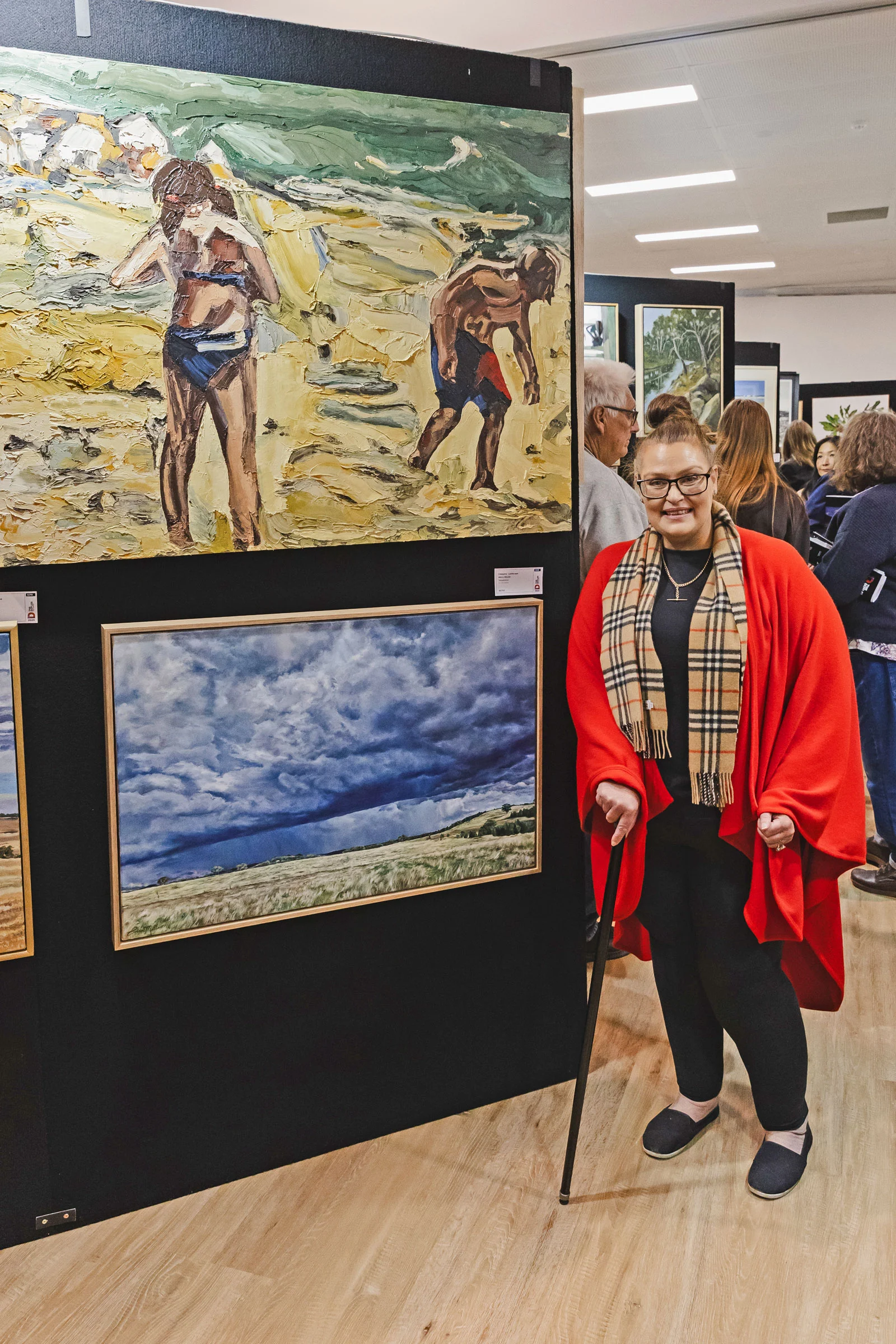
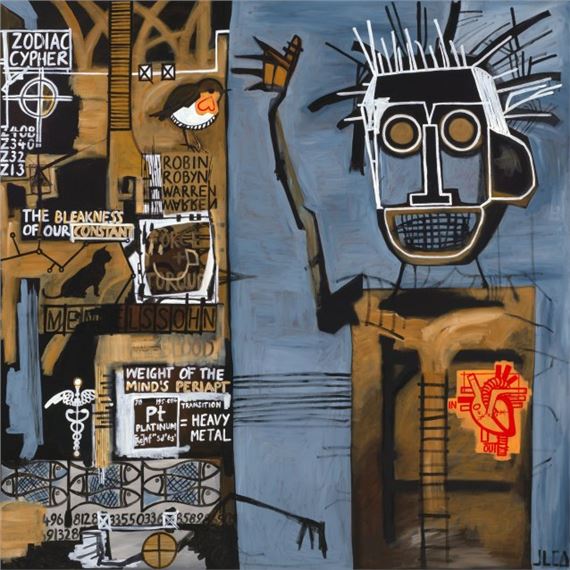
An Australian painter wins $22,000 across two prizes with works that bear striking similarities to Jean-Michel Basquiat and Nicholas Harding. The art world erupts. Artforum covers it. ARTnews covers it. The Guardian covers it. Lawyers are discussing whether the prize money can be recovered.
Meanwhile, AI companies have trained their models on billions of images scraped from artist portfolios, websites, and social media without consent or compensation. Fast fashion brands copy independent designers' work within weeks of it being posted online. Print-on-demand platforms profit daily from artwork stolen from artists who will never know it happened. Temu lists products featuring scraped designs from artists who have never heard of the platform.
Nobody is writing those international news stories. Nobody is threatening to recover the billions in revenue generated from that theft.
The Jane Allan story is real and the questions it raises are worth examining. But the selective outrage around it exposes something more interesting than one artist's choices. It exposes exactly whose intellectual property the art industry has decided to protect — and whose it has decided to ignore.
What actually happened with Jane Allan
Jane Allan is a Lennox Head painter who won the $20,000 Doyles Art Award in the landscape category in 2025 with a work titled Seaside Explorers. Brisbane art dealer Philip Bacon, who represents the estate of Nicholas Harding, identified the work as bearing an extremely close resemblance to Harding's 2011 painting Two Estuary Figures — same figure placement, same canvas treatment, same positioning of rocks and sea, scaled up in size.
Following that discovery, scrutiny turned to Allan's 2022 Darling Portrait Prize submission, Weight of the Mind's Periapt, which had won the Art Handler's Award that year. The National Portrait Gallery acknowledged the work bore striking similarities to Jean-Michel Basquiat's 1982 canvas Untitled (Two Heads on Gold). ANU art historian Sasha Grishin called it a dead ringer and described the pattern as plodding plagiarism rather than casual inspiration.
In both cases Allan had signed declarations confirming she was submitting original artworks. The declarations were the only safeguard in place. There was no image search, no provenance check, no expert verification. The prizes operated entirely on the artist's word.
The declaration problem is the prize system's problem
The most revealing detail in this story is not what Allan did. It is what the National Portrait Gallery admitted: their own art handlers noted the work was clearly influenced by Basquiat at the time of the 2022 submission. They noted it. The prize proceeded. The award was given. Four years later, after an entirely unrelated allegation surfaced, the gallery confirmed what their own staff had observed in real time.
A signed declaration of originality is not a vetting process. It is a liability transfer. The prize organisation is protected because the artist signed. The artist carries all the risk. The actual work of determining whether a submission is original — the image searches, the provenance research, the expert review — is not being done by the institutions handing out tens of thousands of dollars in prize money.
If the Doyles committee had run Seaside Explorers through a reverse image search, they would have found Two Estuary Figures immediately. They did not. If the National Portrait Gallery had acted on what their own handlers observed in 2022, the Darling Prize situation would have been resolved then. They did not. These are institutional failures being processed as an individual artist's moral failure.
What copying actually is in fine art
University fine art programs have always taught copy work as foundational training. The first assignment in many first-year fine art degrees — including at Australian universities — is to take a famous artwork and reproduce it, or reproduce it with a single deliberate change. The exercise teaches observation, technique, and the mechanics of how a finished work is constructed. Every fine art student does this. Every representational artist continues to do versions of it throughout their career.
Portrait artists work from photographic references to create likenesses. Landscape artists paint existing views. Still life artists arrange and paint real objects. Representational art is, by definition, the representation of something that already exists. The craft and the history of painting are built on artists looking at the world, at other artists, at existing images, and producing their own response to what they see.
The distinction that matters is transparency and context. A series of works openly declared as responses to Salvador Dali, with roses added as a symbolic element, bearing the source artist's name in the title — that is acknowledged derivative work. It is a tradition with a name. It is how art history has always worked. Entering competitions that judge design originality while signing declarations of originality is a different thing entirely. That is the line the Jane Allan case crossed.
The billion-dollar theft nobody is outraged about
Every day, artists post their finished work online. Within hours, automated systems have scraped those images. Within days, they may appear on print-on-demand platforms in countries the artist has never visited, printed on canvases and phone cases and tote bags, sold to buyers who have no idea the work was stolen. The artist receives nothing. The platform receives a margin. This happens billions of times.
AI image generation companies trained their models on exactly this scraped data. Stable Diffusion, Midjourney, and other major generative AI tools were built on datasets containing billions of images collected from the internet without the consent or compensation of the artists who created them. Artists Sarah Andersen, Kelly McKernan, and Karla Ortiz filed a class action lawsuit against Stability AI, DeviantArt, and Midjourney over this. Over 100,000 visual artists in the UK mobilised against it. The US Creators Coalition on AI launched in December 2025 to pursue the same concerns at a federal level.
These AI companies generated billions in revenue and valuations from that training data. The artists whose work built those models received nothing and were not asked. The legal cases continue. The companies continue operating. No prize money is being discussed for recovery.
Fast fashion brands operate the same way. An independent designer posts a print online. Within weeks a version of it appears on a Shein or Temu listing at a fraction of the price. The designer has no resources to pursue legal action internationally. The brand has legal teams specifically structured to make that pursuit impossible. The theft is systematic, industrial, and largely consequence-free for the brands doing it.
What "original" actually means
The word original is doing two different jobs in this conversation and conflating them creates confusion. In the context of art prizes, original means the design is the artist's own — the composition, the concept, the visual arrangement was not taken from another specific artwork. In the context of an art market platform, original means the physical object was made by the artist's hands — it is not a print, not a reproduction, not a giclée.
On Solene Haus, original means hand-painted by the artist. It has nothing to do with whether the subject has ever been painted before, whether the composition draws on art historical references, or whether the artist used photographic reference. Portrait artists paint other people's faces. Landscape artists paint places that exist. Every still life artist paints objects they did not invent. Original on this platform means this specific physical object was made by this specific artist's hands. That is the only definition of original that makes sense in the context of selling handmade artwork.
What the selective outrage reveals
The art industry's response to the Jane Allan story reveals exactly which forms of copying it has decided to care about. One Australian artist wins $22,000 with works that closely echo two other artists and the international art press covers it within days. Lawyers are involved. Prize committees are reviewing their processes. There is genuine institutional accountability being demanded.
Billions of dollars in artist work scraped without consent to train commercial AI tools generates lawsuits that move slowly through courts while the companies continue to operate and grow. Fast fashion brands copying independent artists is a known, documented, ongoing practice with near-zero commercial consequence for the brands involved. Print-on-demand theft is so widespread that most artists have simply accepted it as the cost of existing online.
The difference is not the scale of the harm. The difference is who holds the power. Art prizes can pursue one artist. One artist cannot pursue Stability AI, Shein, or Temu with equivalent resources or speed.
What structural protection actually looks like
Watermarks are removed by basic editing software. Right-click disabling is bypassed by a screenshot. Low-resolution uploads are upscaled. Signed declarations only transfer liability — they do not prevent the harm they are meant to prevent. Every measure the art industry has deployed against the theft of artist work is easily circumvented by anyone with basic technical knowledge or resources.
Solene Haus was built around a different principle. The Grid is a structural image protection system that prevents the complete image of any artwork from loading on screen at any point. A collector viewing work on the platform can explore every detail of a painting. A scraper, bot, or screenshot captures only fragments. There is no complete file to steal because the complete image never exists on screen as a single capturable object. This is not a deterrent. It is a structural prevention.
The art industry's approach to protecting artist work has been to ask nicely and add watermarks. The actual problem requires structural solutions built into the infrastructure itself — not declarations, not policies, not guidelines.
The question worth asking about Jane Allan
There is a version of the Jane Allan story that is more interesting than the one being told. What if the work was deliberate? What if entering a Basquiat-adjacent work into a prize administered by the National Portrait Gallery — whose own handlers noted the similarity and said nothing — was designed to expose exactly how hollow the vetting process is?
The National Portrait Gallery knew in 2022. They noted it. They gave her the prize anyway. Four years later, the same institution is distancing itself from the situation. If that was the point all along, the National Portrait Gallery proved it better than any statement could have.
That is speculation. But it is more interesting speculation than the art world's current preferred narrative, which positions one regional Australian painter as the primary threat to artistic integrity in a system that quietly ignores billion-dollar institutional theft every day.
Frequently asked questions
Who is Jane Allan and what did she do?
Jane Allan is an Australian painter who won the $20,000 Doyles Art Award in 2025 with a work critics say closely mirrors Nicholas Harding's Two Estuary Figures. She was also a 2022 Darling Portrait Prize finalist with a work the National Portrait Gallery acknowledged bore strong similarities to Basquiat's Untitled (Two Heads on Gold). She had signed declarations in both cases confirming the works were original.
Is copying another artist's work illegal in Australia?
Reproducing the specific expression of an existing work can constitute copyright infringement. Being influenced by another artist's style is not illegal. The line is how closely the finished work reproduces specific original expression versus how much it draws on general style, approach, or theme.
What is the difference between copying and being influenced by another artist?
Influence means absorbing elements of another artist's approach and producing something genuinely new. Copying means reproducing the specific visual arrangement of an existing work. Copy work is a foundational teaching tool in fine art education. The issue in the Jane Allan case is not derivation — it is signing declarations of design originality for competition entries while producing work that closely mirrors specific existing paintings.
How are AI companies stealing from artists?
AI image generation models were trained on billions of images scraped from the internet without artist consent or compensation. Class action lawsuits have been filed and over 100,000 UK visual artists mobilised against the practice. The companies continue operating while legal proceedings proceed.
What does original art mean on Solene Haus?
Original on Solene Haus means hand-painted by the artist. It refers to the physical object being made by human hands — not a print, reproduction, or giclée. It does not mean the composition is historically unprecedented or that no reference was used.
How does Solene Haus protect artists from having their work stolen?
The Grid prevents the complete image of any artwork from loading on screen at any moment. Scrapers, screenshots, and bots capture only fragments. There is no complete file to steal because the complete image never exists on screen as a single capturable object.
Why did the art prize judges not notice the similarities to Basquiat?
The National Portrait Gallery's own handlers noted the similarity in 2022 and the prize proceeded regardless. The only formal safeguard was a signed declaration from the artist. There was no image search, provenance check, or expert verification built into the process.
Who is Jane Allan and what did she do?
Jane Allan is an Australian painter from Lennox Head who won the $20,000 Doyles Art Award in 2025 with a painting critics say closely mirrors Nicholas Harding's 2011 work Two Estuary Figures. She was also a 2022 finalist and Art Handler's Award winner at the Darling Portrait Prize with a work the National Portrait Gallery acknowledged bore striking similarities to Jean-Michel Basquiat's 1982 Untitled (Two Heads on Gold). She had signed declarations confirming both works were original artworks.
Is copying another artist's work illegal in Australia?
Copying a specific artwork without permission can constitute copyright infringement under Australian law. However, being influenced by another artist's style is not illegal — style and genre cannot be copyrighted, only specific original expression can. The line between influence and infringement depends on how closely the finished work reproduces the original's specific visual arrangement, composition, and expression.
What is the difference between copying and being influenced by another artist?
Influence means absorbing elements of another artist's approach — their colour palette, energy, or thematic concerns — and producing something new. Copying means reproducing the specific visual arrangement, composition, and expression of an existing work. University fine art programs teach copy work as foundational training. Professional artists cite influences openly. The issue with the Jane Allan case is not that her work resembles other artists — it is that she entered competitions with a declaration of originality.
How are AI companies stealing from artists?
AI image generation models including Stable Diffusion, Midjourney, and others were trained on billions of images scraped from the internet without the consent or compensation of the artists who created them. Artists Sarah Andersen, Kelly McKernan, and Karla Ortiz filed a class action lawsuit against Stability AI, DeviantArt, and Midjourney alleging mass copyright infringement. Over 100,000 visual artists in the UK mobilised through the AOI Coalition against unauthorised use of their work in AI training.
What does 'original art' mean on Solene Haus?
On Solene Haus, original means hand-painted by the artist. It refers to the physical medium — that a human being created this object with their hands. It does not mean the composition has never been attempted before, that the subject is invented, or that no reference was used. Portrait artists work from references. Landscape artists paint existing views. Representational artists have always worked from the world in front of them. Original on Solene Haus means this object was made by this artist's hands.
How does Solene Haus protect artists from having their work stolen?
Solene Haus uses The Grid, a structural image protection system that prevents the complete image of any artwork from loading on screen at any moment. A viewer can explore every part of the work in detail. A scraper, screenshot, or bot captures only fragments. There is no complete file to steal because the complete image never exists on screen. This is fundamentally different from watermarks or right-click disabling, both of which are trivially bypassed.
Why did the art prize judges not notice the similarities to Basquiat?
The National Portrait Gallery acknowledged their art handlers noted the work was clearly influenced by Basquiat at the time of the 2022 Darling Portrait Prize submission. The prize proceeded regardless. The only safeguard in place was a signed declaration from the artist. There was no image search, no provenance check, no expert verification process. The entire integrity of the prize rested on the artist's word.