AI Companies Trained on Billions of Stolen Artworks and Nobody Went to Jail
25 June 2026 · 8 min read
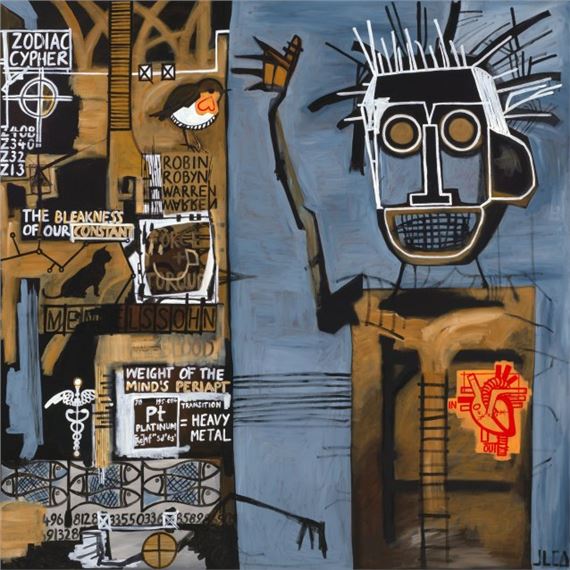
Jane Allan wins $22,000 across two prizes with works that closely echo Basquiat and Harding. Within days the story is in Artforum, ARTnews, the Guardian, and RNZ. Lawyers are discussing prize recovery. Prize committees are reviewing their processes. The international art establishment is activated.
Stability AI, Midjourney, and other generative AI companies trained their image generation models on billions of artworks scraped from the internet without the consent or compensation of the artists who created them. They built companies worth billions of dollars from that training data. The artists who created the work those models learned from received nothing and were not asked.
The coverage of that story has been considerably quieter. The consequences have been considerably slower. The outrage has been considerably more measured.
What the AI companies actually did
Generative AI image models are trained on massive datasets of images collected from the internet. The primary dataset used to train Stable Diffusion and related models was LAION-5B — a collection of billions of image-text pairs scraped from websites, portfolio platforms, social media, and image hosting services. The images in that dataset were collected without the knowledge, consent, or compensation of the people who created them.
Portfolio sites including ArtStation and DeviantArt were heavily represented in those datasets. Artists who had posted their work publicly to build their careers found their entire catalogues had been fed into commercial AI training pipelines. The AI models learned their styles, their techniques, their visual languages — and then generated competing work using what they had learned, undercutting the artists whose work had built the model in the first place.
Artists Sarah Andersen, Kelly McKernan, and Karla Ortiz filed a class action lawsuit against Stability AI, DeviantArt, and Midjourney alleging mass copyright infringement. Over 100,000 visual artists in the UK mobilised through the AOI Coalition against the unauthorised use of their work. The US Creators Coalition on AI launched in late 2025 pursuing similar objectives at a federal level. These are not fringe concerns. These are active legal and political campaigns by working artists who had their work taken.
The scale comparison
Jane Allan's situation involves two paintings, two prizes, and $22,000 in prize money. The question of whether that money can be recovered is being actively pursued by lawyers and Gold Coast city councillors.
The AI training data situation involves billions of artworks, companies valued in the billions, and zero compensation to the artists whose work made those valuations possible. The legal cases are proceeding through courts at the pace that suits the companies being sued, while those companies continue to operate, grow, and generate revenue from the products built on the training data in question.
Both situations involve using artist work without the artist's consent. The scale of one is immeasurably larger than the other. The institutional urgency applied to them is inverse to that scale.
Why the art world finds one easier to address than the other
Jane Allan is one person with no institutional backing and no legal resources comparable to an international art prize committee pursuing prize recovery. Stability AI has a legal team. Midjourney has a legal team. The power differential between the art establishment pursuing one regional Australian painter and the same establishment pursuing billion-dollar AI companies is the entire explanation for why one story moves faster than the other.
It is also easier to have a moral position about an individual artist copying two paintings than it is to have a coherent position about an industry that has fundamentally restructured itself around the unauthorised use of creative work. The AI training data question implicates every platform that hosts artist work publicly. It implicates every tool artists use to share their work. It implicates decisions about whether posting work online is compatible with maintaining any control over it.
Those are uncomfortable questions. One artist copying two paintings is a much cleaner story.
What artists can actually do
The practical reality for most artists is that posting finished work publicly means accepting that it will be seen by systems designed to collect it. Opt-out mechanisms exist on some platforms — DeviantArt implemented an opt-out from AI training datasets — but the default is collection, not protection. Artists must actively choose to opt out of something they never consented to opt into.
Structural protection — preventing complete images from loading on screen in the first place — is the only approach that does not rely on the goodwill of the platforms collecting the data. Solene Haus built The Grid specifically because declarations, watermarks, and opt-out mechanisms all share the same flaw: they ask the people doing the collecting to stop. The Grid means there is no complete image to collect.
The outrage is real. The application of it is selective.
The anger directed at Jane Allan is genuine and some of it is justified. Entering competitions with a declaration of design originality while producing work that closely echoes existing paintings is a specific harm to specific people — the judges, the donors, and especially the artists who competed honestly and lost.
But the art world's capacity for sustained institutional outrage is finite and it has been deployed against one person while billion-dollar companies continue to build products from scraped artist work. That allocation of outrage is worth examining. The artists whose work trained those models are waiting for the same urgency that arrived for Jane Allan's two prizes within 48 hours of the first allegation.
Solene Haus
The art world you deserved.
Zero commission. The Grid image protection. Collector relationships that belong to you.
Join Solene Haus